Gridbooks: bring digital and analog together

Sometimes when you’re creating something as physically intangible as a website, you need to be able to piece it out longhand. Paper and pencil (or pen) gives you a chance to run your hands along the lines of the elements, feel the length and width under your fingertips, and give yourself time to conceptualize it.
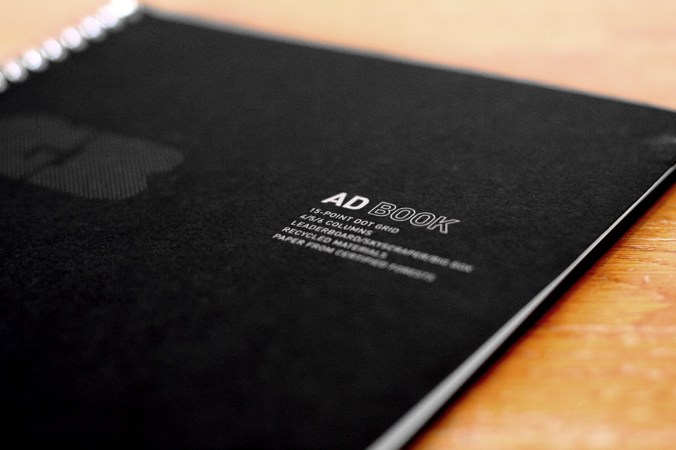
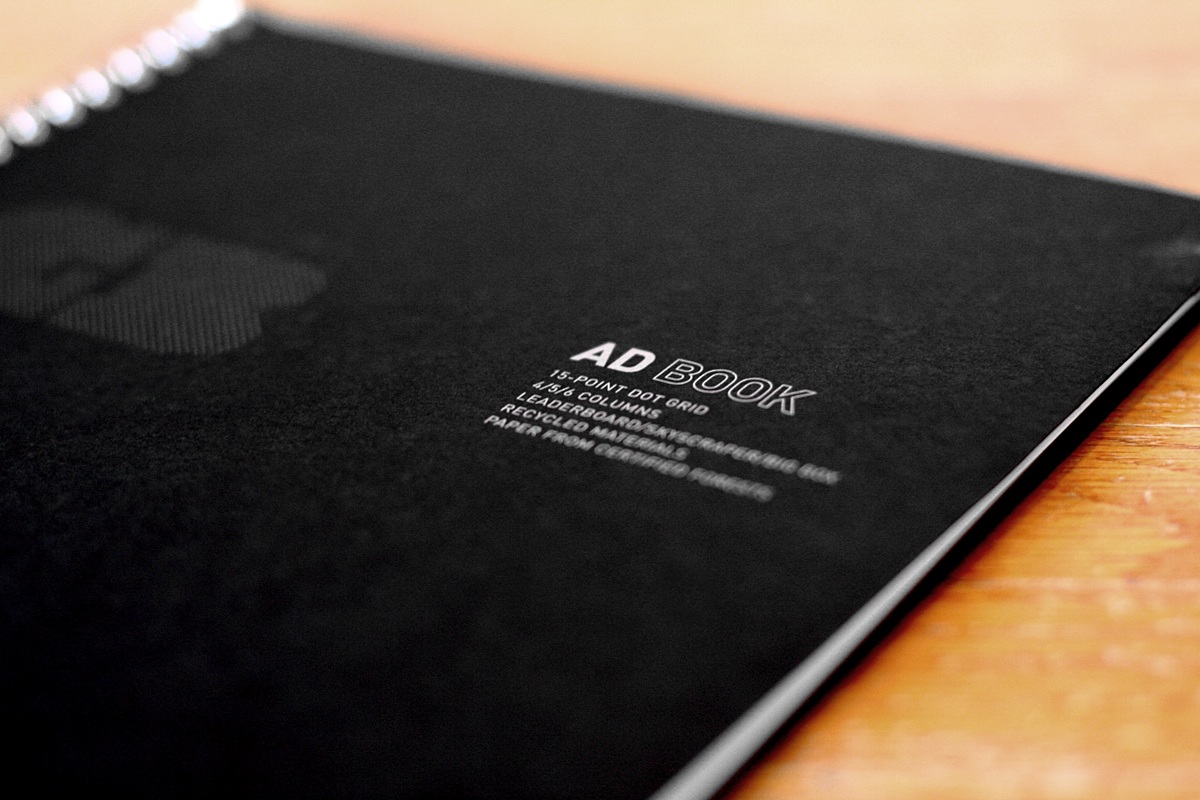
The good folks at Gridbooks recently sent me some samples of their product to try out. They produce really good quality notebooks with flexible grids for ad design and webpage layouts.

I was excited, though I quickly realized that since I’m not a web developer, I couldn’t fully utilize their intricate grid. I needed a better, more experienced opinion.

I handed the samples over to my friend Josh Tuck, a talented web designer and food blogger at The Quest for Zest, a great high-class local food blog. He produces some of the best, boldest, simplest grids I’ve seen. And since he’s the one from whom I learned about Gridbooks in the first place, I knew he’d be interested in giving them a try.

Josh says:

When I was in college, print design on computers was just beginning to crawl out of its infancy into toddlerhood. Our school couldn’t afford speedy new Mac 9500s, so we learned paste up with actual paste instead of “cmnd+v”. I carried this pencil-and-pad approach to laying out ads into my career in advertising. I noticed that when I sketched ideas, for ads or websites, the final result was always better then when I started designing on the Mac.
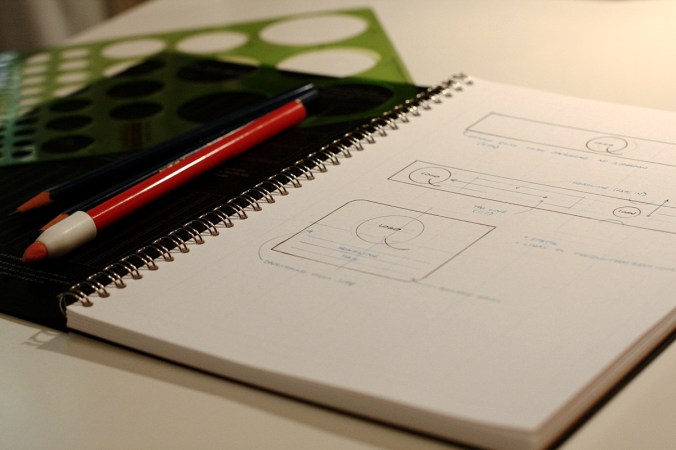
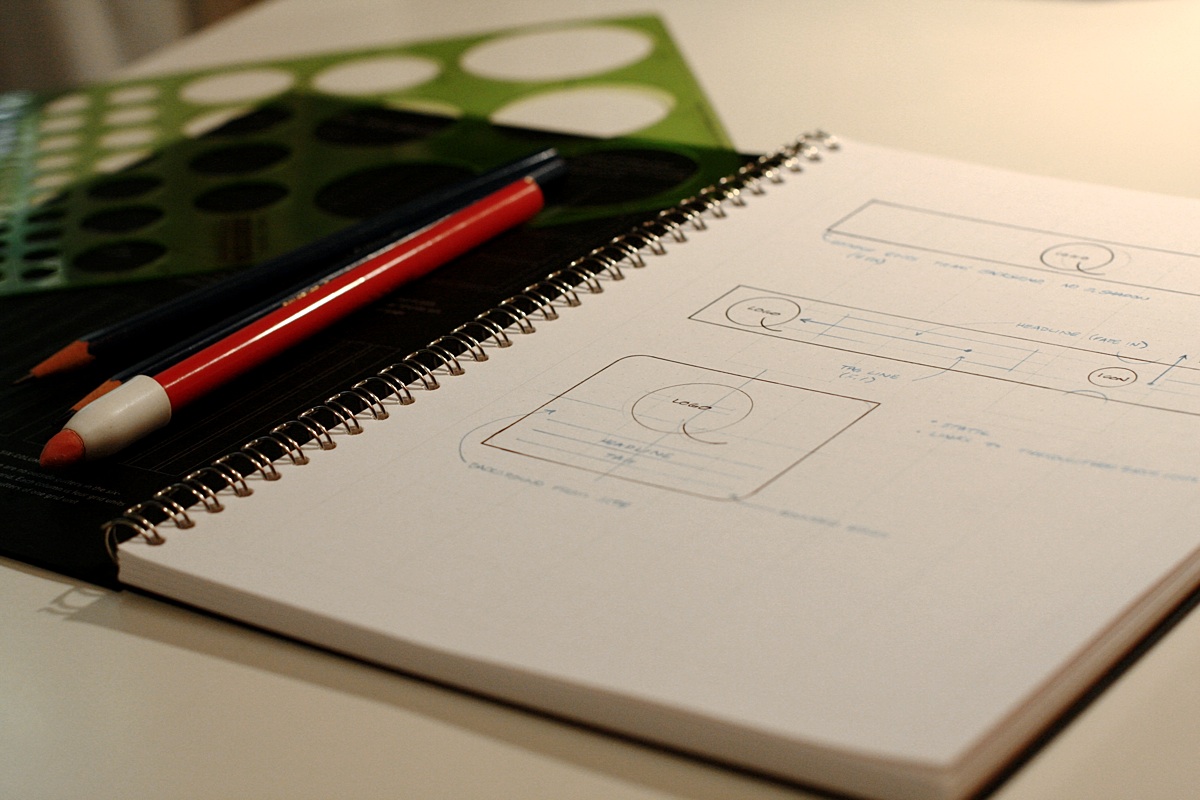
So, from an old-school designer’s point of view, Gridbooks are spectacular. Halfway through testing – with markers, pencils, and circle templates scattered on my desk – I wondered, “Why the hell wasn’t there something like this years ago?” They give you just enough guidance to make concepting easier without getting in the way of the creation process. They are surprisingly versatile, effortlessly usable, and beautifully minimalistic.

That beauty is only “so” nice though, and I like that. As any proper pen and pad snob will eventually confess; if the product is too nice, it risks never being used. I have a stack of sketchbooks and a mug of like-new pens because I am terrified I will ruin them by scrawling something unworthy of their perfectly designed form. Not so with Gridbooks. While they are attractive enough for any designer to carry into a brainstorming session they aren’t so good looking that they will never get used.

The cover of the Ad Book is a toothy 80 lbs. cover stock. It’s folded over on itself for added weight and it’s discretely printed in silver ink. The paper for the interior pages is an 80 lbs. text weight with just the right finish for pencil or pen. The grid lines and dots are just visible and all but disappear under your sketching; a feature I wish I could get from a certain Milan-based notebook company whose products I covet more then my next breath.

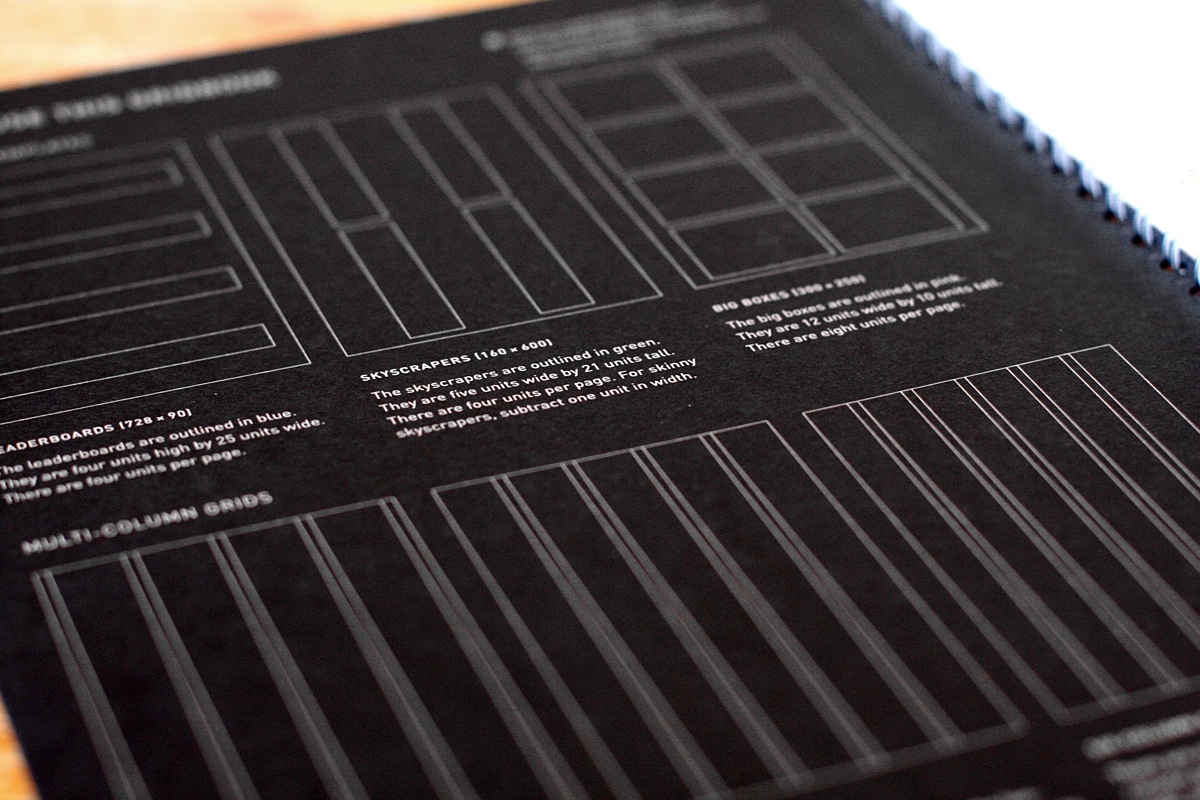
Gridbooks also use an ingenious technique of overlaying many grids on the same sheet. All the key ones are there; banner ads, skyscrapers, and big boxes. Each one is color coded for easy identifying and they are all pixel accurate. The same is true of the web layout pad with it’s 960 pixel 8, 12, and 16 column grids in addition to 3, 4, 5, and 6 column grids.
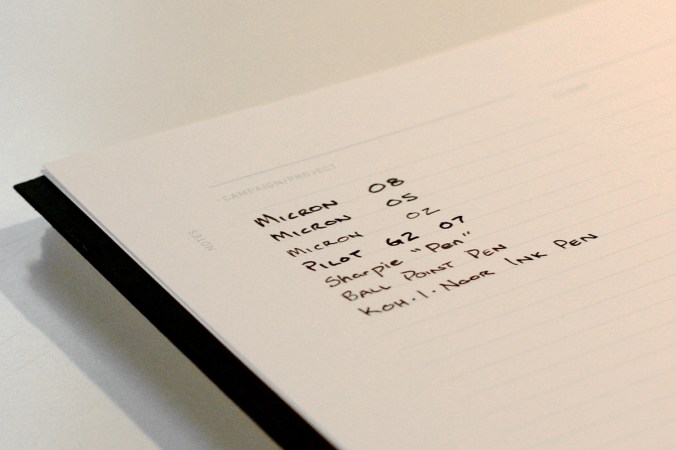
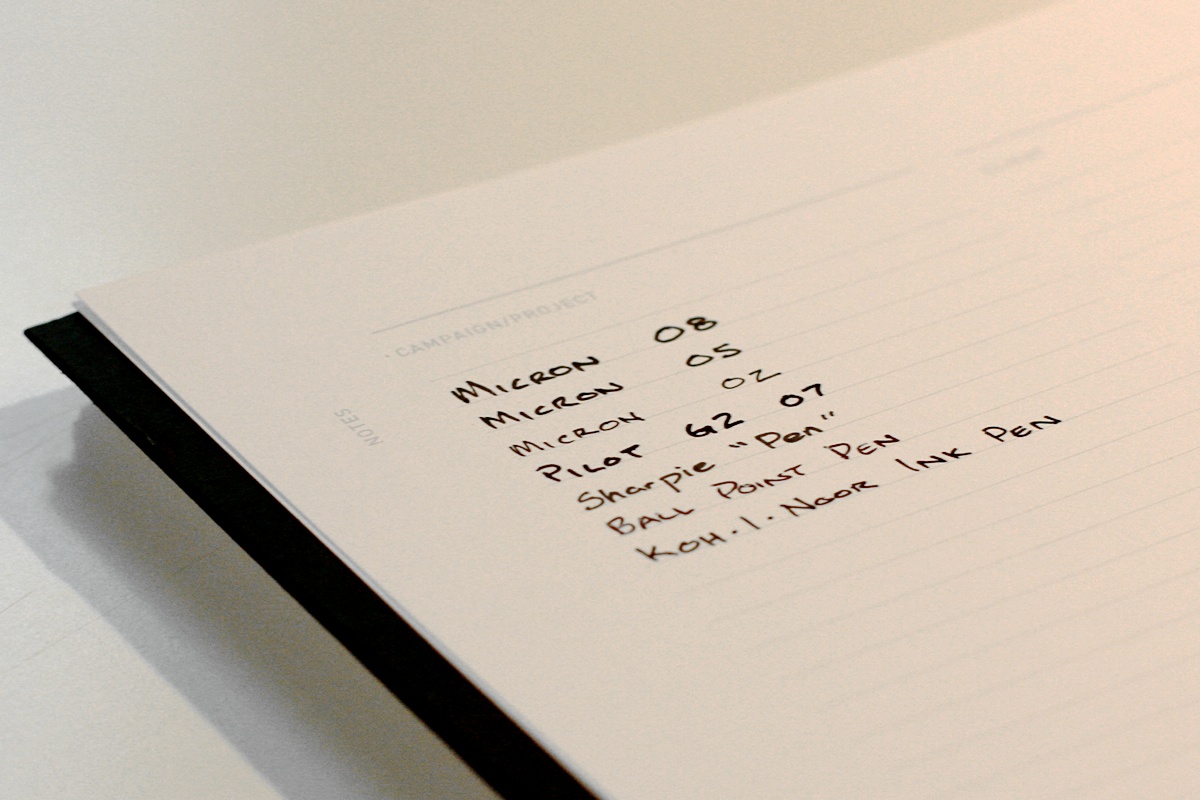
I tried a variety of pens and was pleased to find that they did not lose their edge or bleed through the page. You can truly use both sides of the sheet without fear of blotting up past ideas.

Gridbooks are worth every dime of the purchase price. I firmly believe that sketching is still superior to jumping straight into Photoshop, Fireworks, or even Balsamic. Sketching forces you to focus on the big picture and not get bogged down in the details and Gridbooks make that process faster and more painless then ever.

All photos by Josh Tuck. (In fact, these are the best photographs this blog has ever seen! I need Josh to take all my pictures.

Image Gallery:
The great eraser race

NOTE: This was originally posted on my now-defunct PencilThings blog on October 25, 2007. A reader sent me a little generic vinyl eraser he found, and was impressed with its performance. Although I don’t have the original pictures from the post, I recreated them, only without the purple Dixon mentioned below, which I threw away a couple of years ago.


I love our readers. The commenters we get from the pencil community are friendly, opinionated, and intelligent. And I’m not saying that just to butter them up — since I’ve joined the Pencil Things blog, I’ve met other people who genuinely care about office supplies. I thought I was a freak. It’s nice to know there are others like me out there.


The generic-brand eraser from Dollar Tree that Barrel of a Pencil sent me.


One regular commenter and fellow scribomechanica freak, Barrel of a Pencil, dropped me an email the other day. He said he ran across a vinyl eraser at a Dollar Tree in Lakewood, NY. It was sold in a blister pack of 8 for $1. Although it is comically generic, it erasers like a champ. (That’s right, I used “eraser” as a verb. Anyone gonna challenge me on that?)

He wrote me this:

I post comments under the nom de pencil Barrel Of A Pencil.  If possible I would like to send you one of the little generic  white vinyl erasers I wrote about in my comment posted to Pencil Thing’s ruminations on the timeless question Why The Pencil. (Check out the post here. -AW) Ideally, I  would like to see you review this little gem either  on its own  merits or in competition with the usual name brand  suspects  (Staedtler, Pentel, Faber-Castell, etc.). I think its a  whiz-bang  of an eraser and a steal at 12 1/2 cents (8 for a  dollar).

Just so everyone knows, I usually prefer my eraser to be on the end of the pencil. It’s easier to use, and I think the extra weight the eraser and the ferrule adds to the pencil helps me balance it. However, sometimes I just have to use my ferrule-less Palomino. That’s when I want to keep an eraser by my side.

When I received Barrel’s donation to The Cause in the mail, I did a little gleeful dance. Once I settled down, I opened it, and there was this somewhat comically generic little eraser wrapped in plastic cellophane. It said on it, “Erasers Extra Soft & Clean” and then, just in case we had no idea what to do with it, “Home • Office • School.”

Whew! Now I have some direction…

I opened the cellophane, and was pleased by how soft it really was. It was sort of squishy, a little like those stress balls everyone has but never seems to use.


Staedtler Mars plastic eraser. The cream of the consumer-grade crop.


For the review, I pitted it against a Staedtler Mars plastic eraser (95 cents, Product Page), and just to shake things up a bit, an old purple Dixon rubber eraser I found at the bottom of my desk drawer (3 for $1.00 almost anywhere) just for contrast.

Please keep in mind that this is not a test of different eraser types — vinyl vs. rubber vs. moldable, etc. That’s for another review. For the purposes of this post, I tried to keep my subject narrowed to these particular erasers.

Both the Brand X and  the Staedtler Mars came in a cardboard sleeve, which doesn’t really serve any purpose I can gather except to keep the rest of the unit from getting dirty. It’s kind of like the little sleeve they put on ice cream cones. Eventually, you have to take it off when you start to use it up. In the meantime, they do make the erasers look nicer, don’t they?

My test was conducted as follows (see picture below): I wrote on a piece of notebook paper in heavy HB graphite marking, “Erase me!”. Then I erased it with each eraser, drawing the unit over the words exactly five times. I tried to take care to use the same amount of pressure for each. Take a look (and please excuse my crappy lettering and my equally crappy camera):

For 13 cents, I have to tell you and Barrel of a Pencil that the Brand X eraser worked like a charm. He definitely got his money worth. I usually gravitate toward plastic erasers because, unlike rubber erasers which get debris all over the page, plastic/vinyl erasers (which are both the same, aren’t they?) just leave one little scrap, or roll, which can be picked off and thrown away. It was a smooth glide across the paper, and perhaps my only objection is that it is too soft. It did leave a bit of a mark left over, but after another couple swipes across the words (done after I took the picture), they were completely gone.

If price is no object, though the Staedtler 95-cent eraser was the best. Check out the fact that there is almost no mark left over. It was just as smooth as the Brand X, and it was firmer. I wasn’t afraid the eraser would crumble off onto the paper.

The Dixon, as I expected, wasn’t great. I can still almost read “This is a test” left over on the page. To be fair, much of this is due to the fact that the eraser is probably a couple years old, and dirty. I only put it in the test to make a comparison to most of the erasers out there.

To be fair to the Brand X pencil, the Mars is a good one-and-a-half times longer. Even if I were able to buy it smaller,  the eraser-to-price ratio would make it about 63 cents, nearly five times the price of the Brand X.

In a nutshell: If money is no problem, and/or there are no Dollar Trees in your area, get a Staedtler or another quality name-brand. However, pound for pound, Barrel of a Pencil’s little find is worth it. You’re sacrificing a bit of quality, but it erasers very cleanly, and you get all the benefits of a vinyl eraser — no debris!

A note to our readers: Anyone recognize that Brand X eraser? Do you have any manufacturer contact info?

Thanks, Barrel of a Pencil! Anyone have any finds they want to pit against the name brands? Let me know!

Orange fever: The classic Rhodia notepad

NOTE: This post originally appeared at the now-defunt PencilThings blog on July 9, 2007. See it, sans CSS or images, at the Internet Archive here.


I first discovered this wonderful little orange notebook back in 2003 when I was watching one of my favorite shows, Good Eats. The host, Alton Brown, was writing a grocery list on a Rhodia notepad. It didn’t process with me, until a year later when I attended college at Indiana University in Bloomington, IN. There is a great little store there called T.I.S. that sells textbooks, college apparel, and office supplies. Yes, office supplies! A veritable plethora of pens, pencils, and paper.

One shelf had a shoddy little orange display. Though it was in disrepair, the orange-ness and the stylized European look lent itself to hipness and—what immediately attracts me to almost any consumer product—cult following. That episode of Good Eats sprung into my mind, and I realized: if my hero Alton Brown has one, by gum—I need one too.

Fallacious though my reasoning was, it was one of the best purchases I ever made. Yeah, it is cool looking. (Aesthetics count for a lot, just read some of my pencil reviews.) The bright orange and the crisp black  go so well together, you don’t even think of a Halloween theme. Immediately upon opening the cover, you know you’ve reached notepad nirvana. The satin-finished paper is think, luscious, and smooth. If writing on a standard notepad is like driving down the street, writing on Rhodia paper is like cruising in your hovercraft across a giant swimming pool. On a calm day. Take a look at the paper:

Isn’t that nice? (The image is not mine.)

Notice that both pictures feature graph paper in their notebooks. Chill out, man, that’s the way the Europeans do it. I personally like it. That way, you can write with the notebook turned portrait or landscape. For your American purists out there, they do come in lined versions.

I can even tell you what my favorite size is—the 3″ x 8.25″. It is extremely long and skinny and fits in the palm of your hand really well. Perfect for making lists and, if you are a reporter, taking notes on the go. I spent some time working for a newspaper and this was my best friend.

Unfortunately, yes—Rhodia is expensive. An 8.5″x11″ pad with 80 sheets will cost you about $9, as opposed to less than a dollar you might spend on a Mead notebook from Target. But it is worth it. Trust me.

Find Rhodia notepads at Pencil Things and many other fine stationary retailers. Also, one of my favorite blogs, Rhodia Drive, is devoted to their full line of products.

Overall rating: 4.5 out of 5 points.


UPDATE 09/27/10: I’ve been using Rhodia notepads every day since then. Often when I review a pencil, it provides a white background on which I base the blackness of the graphite. I have discovered, as John from Pencil Revolution mentions in his review of Field Notes, that for some pencils, the creamy, smooth paper of Exaclair products sometimes doesn’t “catch” the graphite as well as something more fibrous, like Field Notes. But for high-end pencils and—gasp—ink pens, Rhodia is king in smoothness, bleedlessness (which I’m pretty sure isn’t a word), and quality.

Save a tree, write with a newspaper

Editor’s Note: I  originally wrote a review of these two products for the now-defunct PencilThings.com blog in December, 2007. Nearly 3 years later, I am re-reviewing them. Check out the original review at the Internet Archive. (warning — there is a jarring lack of CSS styling. Scroll down for the article)


Left: The TreeSmart HB Right: The O'Bon Protect Wildlife 2B

Here’s something I have never resolved in my love of pencils: the wood consumption. Although I would not consider myself an environmental activist, I try to live my life in a green manner — I drive a fuel-efficient small car. I recycle. I use the blank backsides of paper. I use travel mugs, not paper cups. Et cetera, et cetera.

So when I watched this video, sure — it makes me feel guilty: Continue reading