My father-in-law’s old notebooks

My wife and I recently stayed at her parents’ house for a few days while the first floor of our place was being re-ceilinged. While a disruption in one’s life like that is never particularly fun, I did enjoy a change of scenery—there’s something that can be reinvigorating in changing the stuff that surrounds you. I was amongst a collection of belongings accumulated over decades, but weren’t our belongings.

This fact was never as apparent as when I closed myself in my father-in-law’s office to record Episode 3 of Erasable (have you heard it yet?).

My father-in-law reminds me a lot of Ron Swanson from Parks & Rec. He’s very libertarian, fairly private and extremely independent. He’s a civil mechanical engineer by trade with lots of interesting hobbies—he builds boats, he makes wine in his basement and he collects antique guns.

And while not an official collection, he has lot of interesting notebooks—old notebooks—laying around.

Keuffel & Esser Field Book

My favorite is this one, which caught my eye right away:
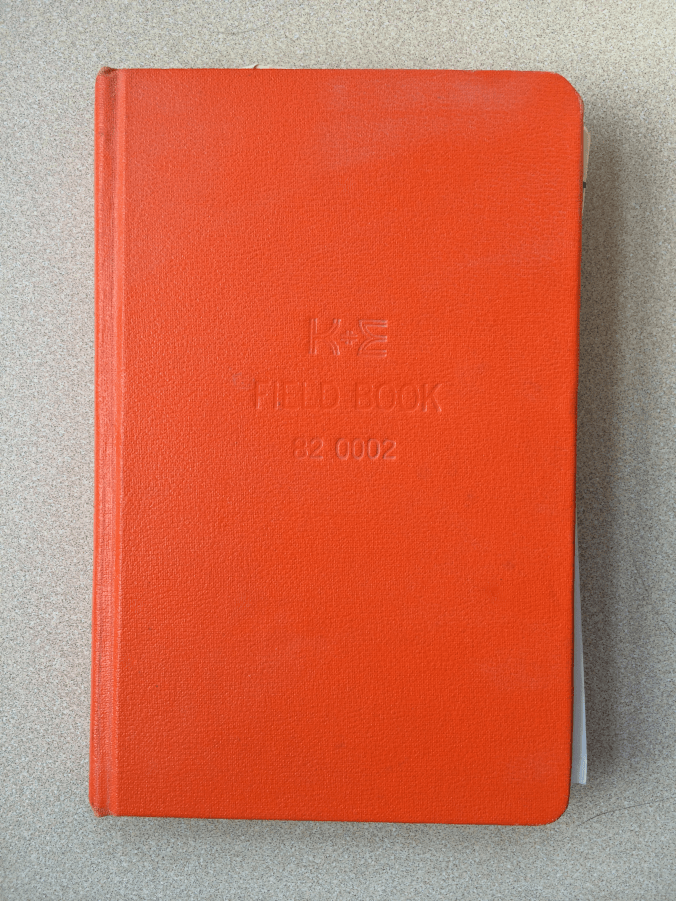
K&E Field Book by Keuffel &  Essel

K&E Field Book by Keuffel & Esser

Look how cool this is! Made by Keuffel & Esser, a US-based drafting instrument and supply company. It was founded in 1867, the first of its kind in the US, and lived on until 1987 when it was bought by the AZON Corp in 1987.

So this notebook is at least 27 years old, right?

Let’s look at the inside cover: orange-open
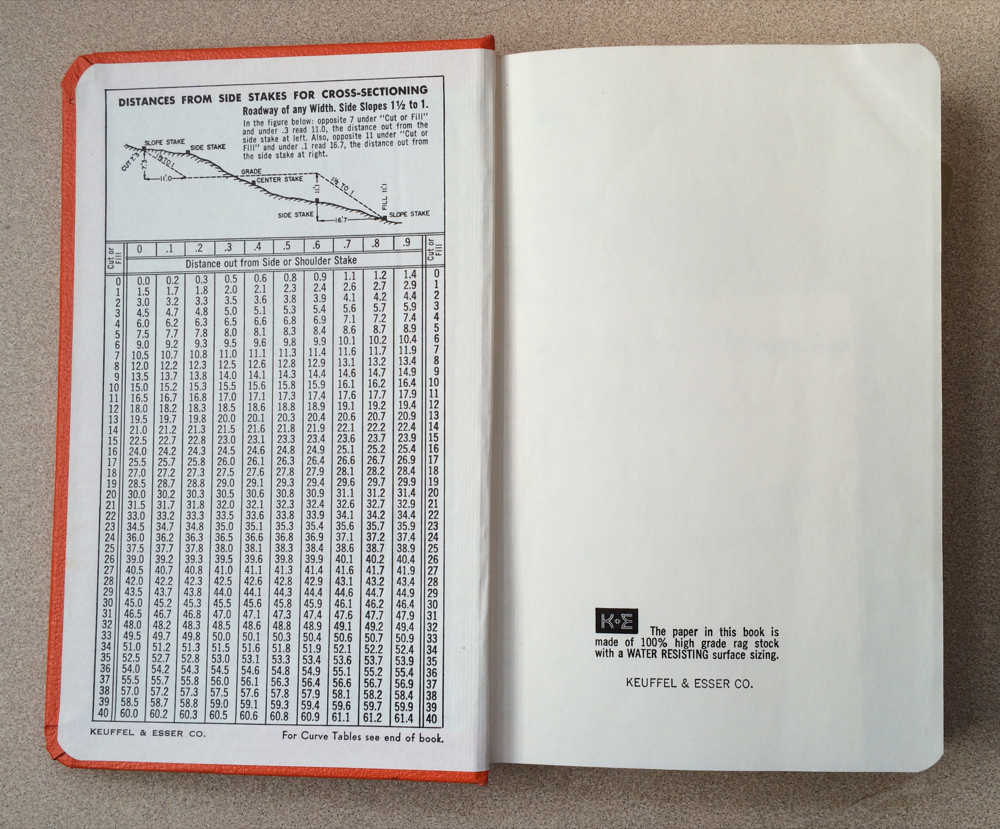
This A5-ish notebook is filled with data tables, formulas, conversions, and other useful data for engineers. I can’t imagine how handy this kind of thing would have been to someone like my father-in-law in a day before this information was available through a smart phone. Some more reference goodness from the back of the notebook:
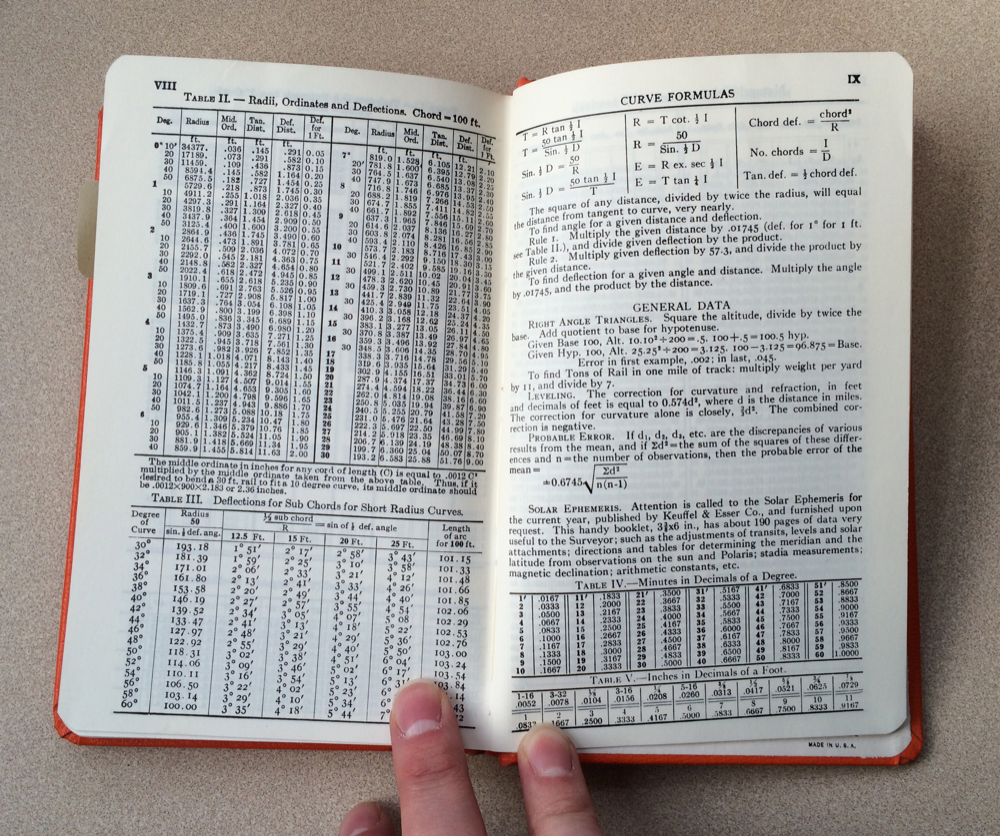
orange-formulas

The back pages of the Keuffel & Esser Field Book are filled with data tables, conversions, formulas, and other information an engineer would find useful. Forgive my fingers in the shot — this book has difficulty staying open.

My favorite thing about it? The grid paper:

Keuffel & Esser Field Book grid

I’m not entirely sure of the particular function of this paper (a coworker suggested it’s for lots of tabular data, much like an Excel spreadsheet is now), but the grid on the left is separated into six columns by pink lines, which I believe are three times wider than the horizontal line hight. The right side of the spread is separated into two columns by a pink line, with smaller vertical blue lines that make a grid that’s twice as tall as wide.

Boorum & Pease Memo Book No. 6565

As I mentioned earlier, my father-in-law built a boat. We all thought it was an improvised affair; with PVC pipes lashed to two-by-fours and duct tape. But he’s apparently been planning it for quite a while. In fact, he has a whole notebook where he planned it out and documented his project:
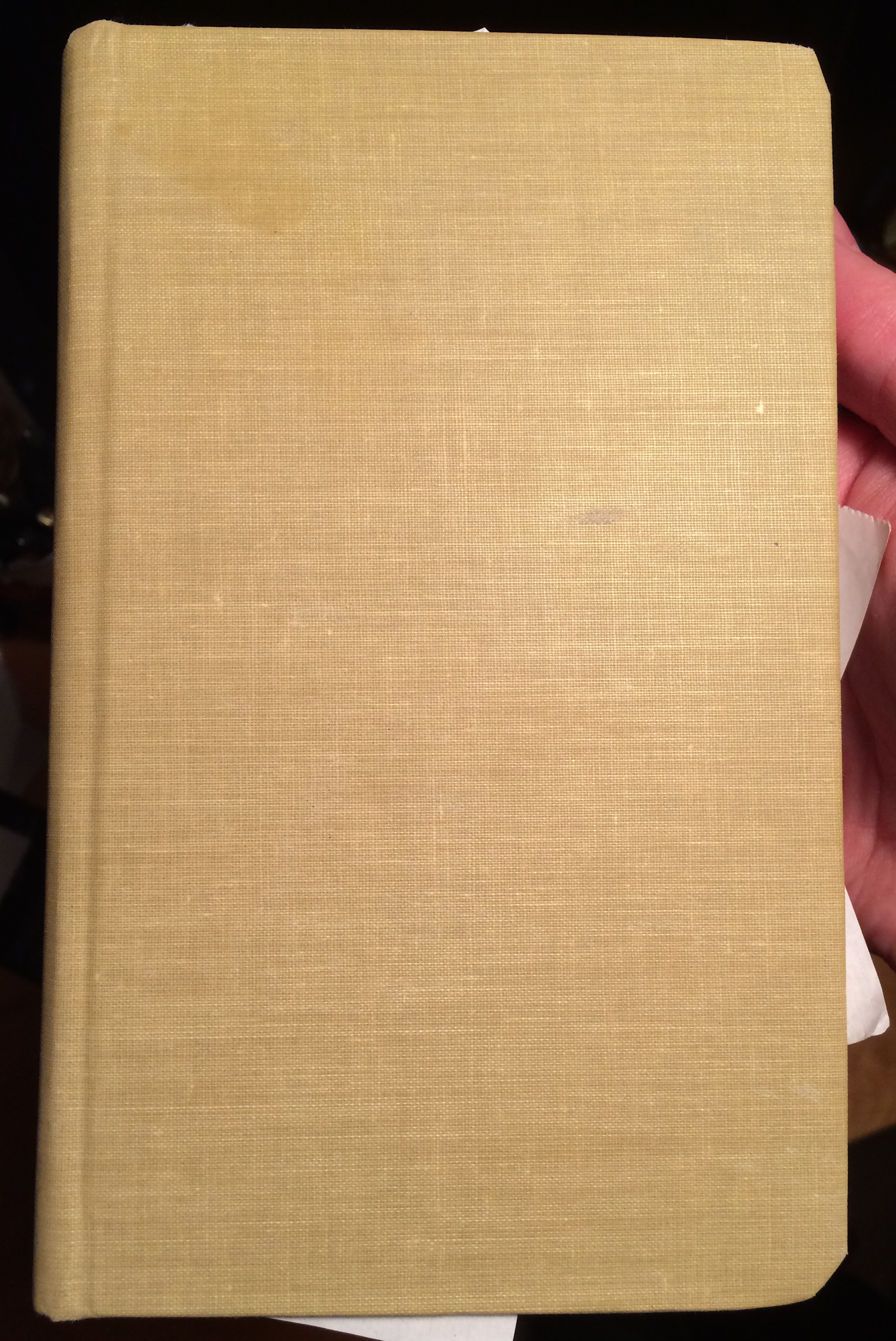
Boorum & Pease Memo Book

Boorum & Pease Memo Book

Boorum & Pease Memo Book

I blurred out my father-in-law’s name because I assume he wouldn’t want to that out floating around on the internets.
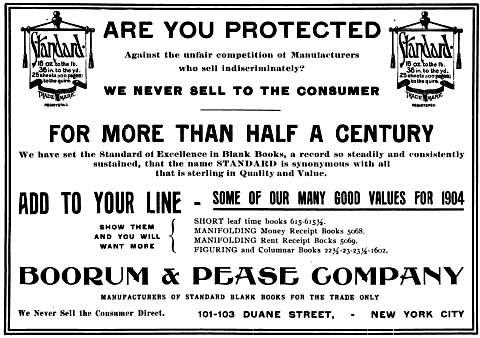
Boorum & Pease adThis notebook is branded with the “Boorum & Pease” name, which sounds to me like something Click and Clack from “Car Talk” would come up with. The Boorum & Pease Co (Blank Books and Loose Leaf Devices) has been around since, it looks like, the 1870s (as this 1904 ad boasts, “for more than half a century”). They sold specialized notebooks for laboratories, ledgers for accounting, receipt books, et cetera.
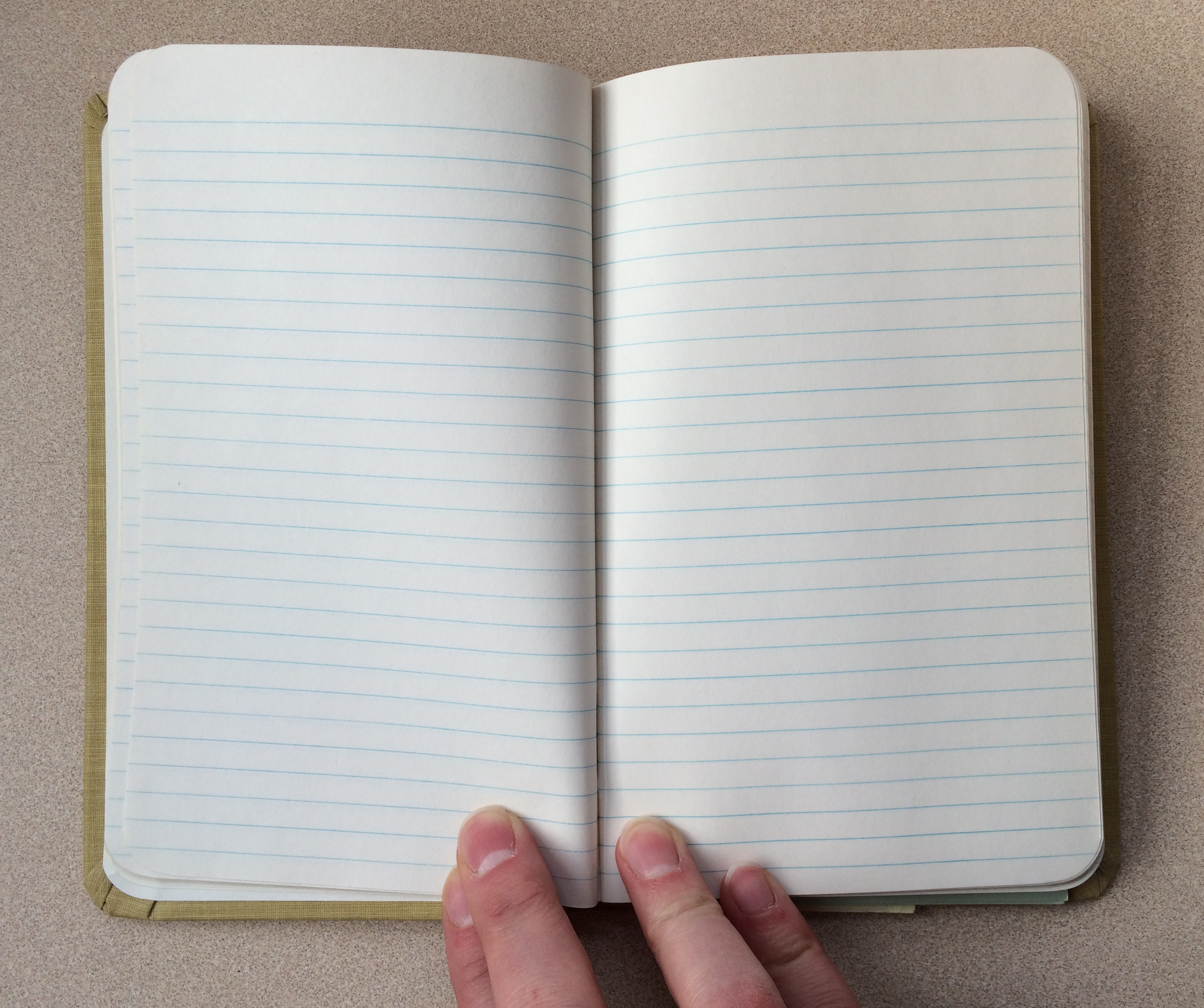
Boorum & Pease memo book lined paper

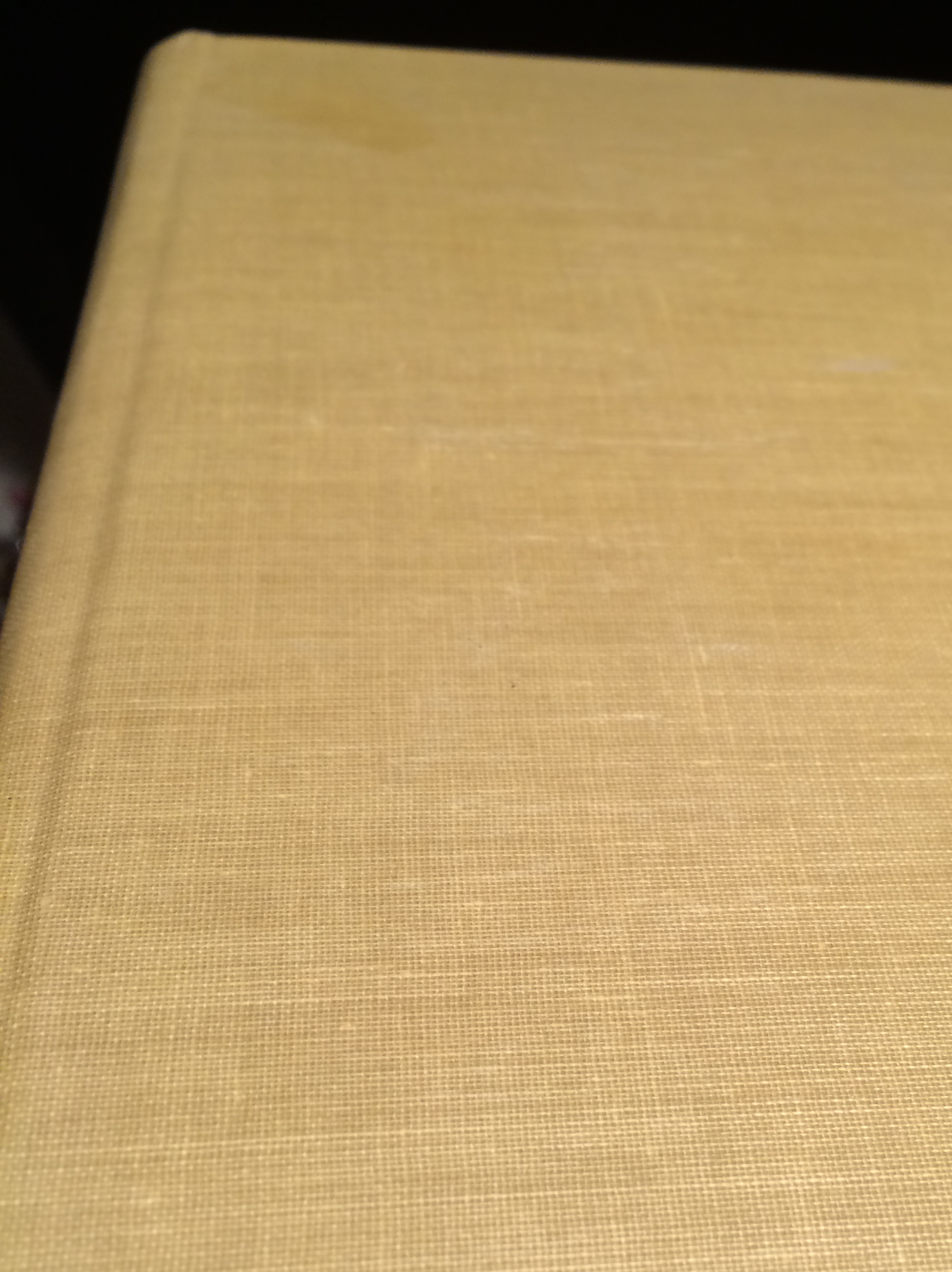
A close-up of the cloth binding on the Boorum & Pease memo book.

A close-up of the cloth binding on the Boorum & Pease memo book.

I’m a fan of the binding on this book — it’s cloth-bound, reminescent of old, mid-20th century hardcover books. How handsome would the cover be with a big foilstamped signet or simple illustration?

The paper is nothing to write home about, but it’s a nice, plain college-ruled page. It’s thin, but not too thin. Since this isn’t my notebook, I wasn’t able to test it with pencil and fountain pen, but I imagine it might handle a dry to medium fountain pen without too much bleeding.

In fact, the still around, though it’s unclear to me who owns that brand name. I don’t think they are their own company. They still make columnar books (kinda gaudy looking, if you ask me), and while this particular model is not still in production (#6565), they still make something that looks reallllly close, #6559. I doubt it’s cloth-bound, though.

Here’s a pretty great history of Boorum & Pease by Walter Grutchfield.

Other old vintage memo books

I’ve seen lots of great memo books like these over the years that just seem like they’re made better than your typical notebook serving similar purposes. Sure, there are small independent ventures that produce great ones now, but these were in mass production, and no doubt costed much less than indie craft notebooks now.

Do you have any interesting ones to share?

Erasable, Episode 2: A Ferrule to Arms

Last night, we just posted Episode 2 of Erasable, and it was a lot of fun. It was our glossary episode where we talked about the history of the modern wood pencil, and defines several terms that we use. Tim talked about the ferrule and eraser, I talked about the wooden barrel, and Johnny talked about the graphite core.

We learned a lot about Nicolas-Jacque Conté, a French inventor who pioneered the modern graphite core. With a satin eyepatch and AN ENORMOUS HEAD, he looks like a pretty badass pencil pirate:

Nicolas-Jacques-Conté, the inventor of the modern graphite mixture in varying hardnesses. Also, a pencil pirate.

Nicolas-Jacques-Conté, the inventor of the modern graphite mixture in varying hardnesses. Also, a pencil pirate.

We’re also having a giveaway! Between now and next Sunday, March 30, if you leave a comment on the episode post on Erasable.us, with a literary or movie pencil pun (for example,  “A Ferrule to Arms”), you’ll be entered to win one of 6 prizes: each of us co-hosts will be putting together two packs of some of our favorite pencils.

Because we want to use as many puns for episode titles as we can, we then get to use your pun for a future episode title. (With a credit to you, of course!)

Go check out the episode now, either on Erasable.us or iTunes!

Field Notes introduces a woodcased… notebook?

I hate to be that guy who fawns all over a product, but dang it, Field Notes makes it so easy.

Just when you don’t think they can top themselves, they release woodgrain notebook.

This this is beautiful:

Field Notes Shelterwood

Field Notes Shelterwood

From their website:

The “Shelterwood” edition features covers made from actual American Cherry wood, sliced ever-so-thin and bonded to a substrate of kraft paper for durability. We believe we’re the first notebook company to manufacture such a product at such a scale.


Droooool.

As with all of their quarterly releases, this includes a short video showcasing the production of it. It’s fascinating how they shave the wood off the log so thin:

Presumably the wood is extremely pliable, but as we discussed over at Field Nuts, this is not a back-pants-pocket notebook; it’s a front-shirt-pocket notebook for sure.

I feel like it was made especially for us wooden pencil fanatics. It’s a woodclinched notebook!

Once I get my hands on one, I’ll post some shots of the grain. (Why don’t I have the annual subscription again?)

The notebook is $9.95 for a three pack, available here. And once it’s gone, it’s gone!

Presenting: the Erasable podcast!

I’m a big, big fan of podcasts. Whether it’s the Pen Addict, any of the tech podcasts I listen to, or public radio shows presented in podcast format, I’m deeply entrenched in the medium.

I’ve been wanting the chance to do a podcast for a couple years now. Pencils seemed like a logical topic; trouble was, I didn’t think I could come up with enough content for a regular show. It’d hard enough keeping this blog up to date, and I didn’t want a podcast that was just an audio version. It should have something different.

Enter Tim Wasem of The Writing Arsenal. He’s a relatively new blogger of scribomechanica who jumped in head-first and is brimming with enthusiasm and ideas. So when he approached me about maybe collaborating on a pencil podcast, I was really excited.

We both knew that Johnny Gamber over at The Pencil Revolution needed to be involved, too, if he was willing. His experience and contacts in the pen and pencil community are unrivaled, and his mind and wit are sharper than a pencil fresh from a Classroom-Friendly Pencil Sharpener. Luckily, he was interested in joining us.

The trio was complete!

After some back-and-forth, and a trial run, we present: The Erasable Podcast!

erasable_temp_cover_largeWe’ve still got a lot to figure out, and as you can tell by the audio and the format, it’s still a little rough. But we’ve already caught the attention of a lot of listeners already (and the iTunes podcast directory hasn’t even approved our feed yet!

The description from this first episode:

So the audio’s a little rough, and we ramble about the philosophical implications of writing with wooden pencils, but Erasable is up and live with our inaugural episode! We’re starting off with some basics: our origin stories, why we started blogging about pencils, our top favorites, and the characteristics of a good pencil.


We’ll be back next time with a glossary episode: the terms we use when we talk about pencils.


Give us a listen, either by hitting up the website, or by subscribing directly to the feed with your favorite podcast-listening app. And we want to know what you think! Feel free to comment here, there, or via email if you have any questions or suggestions. Seriously, we’d love to hear from you.

The Koh-I-Noor Triograph: The Sharpie of pencils

The Koh-I-Noor Triograph

I finally got my hands on a pencil that I’ve liked for a long time — the Koh-I-Noor Triograph. I fully realize that it’s not a writing pencil, but a sketch pencil. From the Koh-I-Noor website’s product page:

These 5.6mm lead pencils are excellent for working in large areas and for quick, loose strokes; they blend extraordinarily well too.

They can be used alone or in combination with a plethora of artistic media to achieve effects as unique as the individual artist.

That’s a little fancier that I get, folks. But man, they’re gorgeous. I love the stain on the wood barrel:

Closeup of the Koh-I-Noor Triograph tipCloseup of the Koh-I-Noor Triograph barrel.

I also really like triangular barrels. That was definitely a big decision factor for me.

So when my pencils arrived from Jetpens (Disclosure: I received these pencils at no charge for review purposes), I opened then excitedly. Continue reading