A clever ad campaign for Dixon Ticonderoga

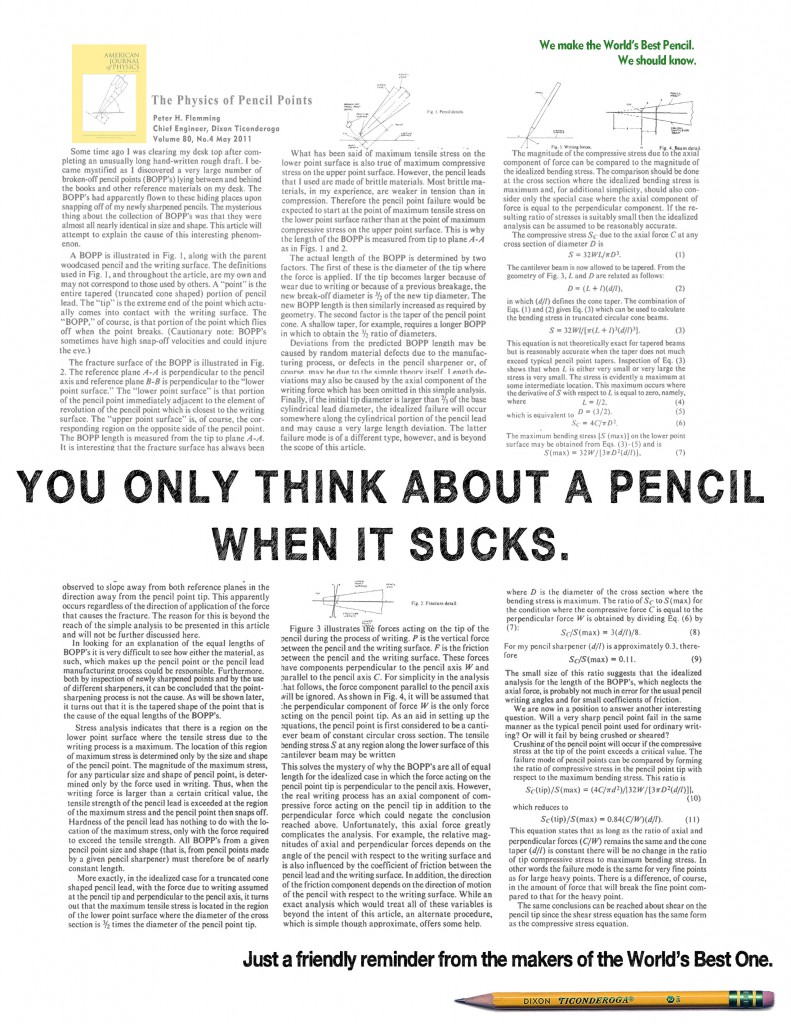
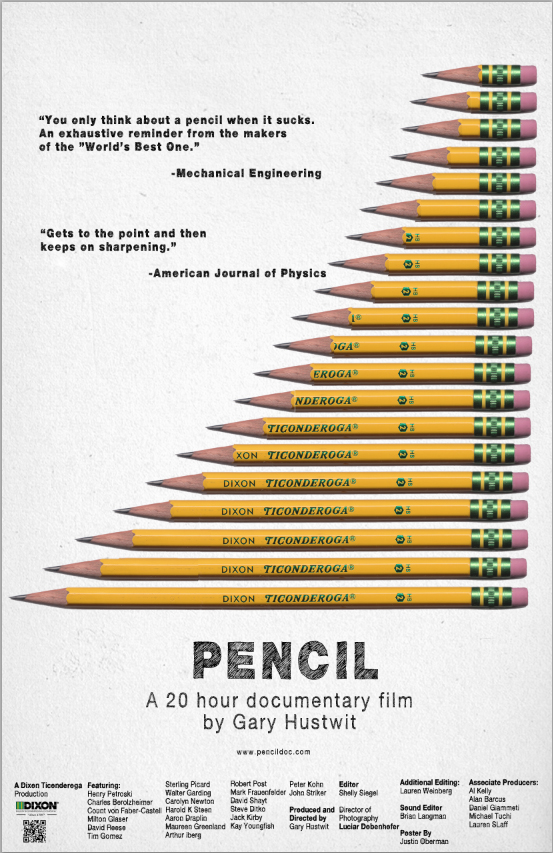
I got an email the other day from Justin Oberman, a creative ad guy who conceived of an ad campaign for Dixon Ticonderoga, maker of the ubiquitous yellow-pencils-with-green-ferrules (via a class on advertising). His angle is that there isn’t much Dixon doesn’t know about making pencils, and features informative posters with the tagline, “We make the World’s Best Pencil. We should know.”

This poster reminds me a lot of Henry Petrosky’s book The Pencil: a History of Design and Circumstance about how wooden pencils are a perfect example of thousands of years of design and engineering, and I, Pencil, about how modern pencils are an achievement of globalization and the distribution of expertise and labor.

This is my favorite, and one I want desperately to be true. Gary Hustwit, creator of the documentaries Helvetica and Objectified (both of which I am a huge fan), would be perfect for a documentary about pencils. Perfect! Alas, upon asking Justin more about it, I discovered it’s purely a concept. As Justin said, however, “maybe he’ll see the poster and get the idea.”

Here’s hoping.

Justin gave me a lengthy and highly fascinating story about creating this campaign. While I won’t share it all here in its entirety, here are some highlights.

In the end the campaign aims to tell you more about pencils then you ever wanted to know. (Unless you’re a pencil blogger — ASW) By doing this, Ticonderoga not only shows that they are very serious about pencils, but by getting really emotional about it they show that they are not just a pencil company but in far the world’s best pencil company. And by re-educating everyone about pencils they can remind everyone of that. Why? Not because people will actually read all the dizzying pencil knowledge they throw at them… people will get the point (pun intended). It’s simply that bad pencils give all pencils a bad name. In fact, the campaign reminds you that undoing the competition is not the same as undergoing it.

And something I’ve been saying for years:

Bringing to light the novelty of the pencil has the opportunity to make them en vogue.The pencil can benefit from its sense of nostalgia.  If this campaign was successful one can imagine a hipster telling his wannabe hipster friends at a cocktail party that, yes, that is a pencil behind my ear and by the way I only use pencils. Pencils are cool etc etc etc….  and then I realized that this could be the voice of the campaign, turning Dixon’s “We Make The World’s Best Pencil” into the guy at the party who only talks about pencils.

As someone who is often that guy at the party who only talks about pencils, telling his hipster friends why the pencil is making a comeback, I can appreciate this ad campaign. They turn pencil trivia into an art, thereby making someone who is educated about it a connoisseur.

Thank you, Justin, for sharing this! Check out this ad campaign on Justin’s website, OberCreative, or on the AdWeek Talent Gallery. And check out a couple more of his posters in the gallery, below.

.
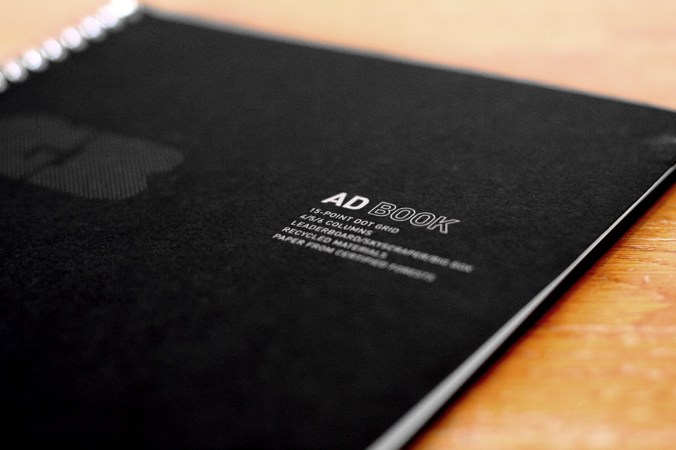
Gridbooks: bring digital and analog together

Sometimes when you’re creating something as physically intangible as a website, you need to be able to piece it out longhand. Paper and pencil (or pen) gives you a chance to run your hands along the lines of the elements, feel the length and width under your fingertips, and give yourself time to conceptualize it.

The good folks at Gridbooks recently sent me some samples of their product to try out. They produce really good quality notebooks with flexible grids for ad design and webpage layouts.

I was excited, though I quickly realized that since I’m not a web developer, I couldn’t fully utilize their intricate grid. I needed a better, more experienced opinion.

I handed the samples over to my friend Josh Tuck, a talented web designer and food blogger at The Quest for Zest, a great high-class local food blog. He produces some of the best, boldest, simplest grids I’ve seen. And since he’s the one from whom I learned about Gridbooks in the first place, I knew he’d be interested in giving them a try.

Josh says:

When I was in college, print design on computers was just beginning to crawl out of its infancy into toddlerhood. Our school couldn’t afford speedy new Mac 9500s, so we learned paste up with actual paste instead of “cmnd+v”. I carried this pencil-and-pad approach to laying out ads into my career in advertising. I noticed that when I sketched ideas, for ads or websites, the final result was always better then when I started designing on the Mac.

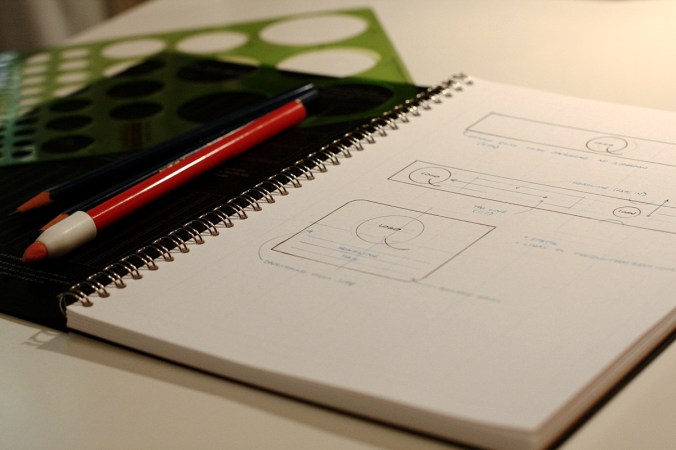
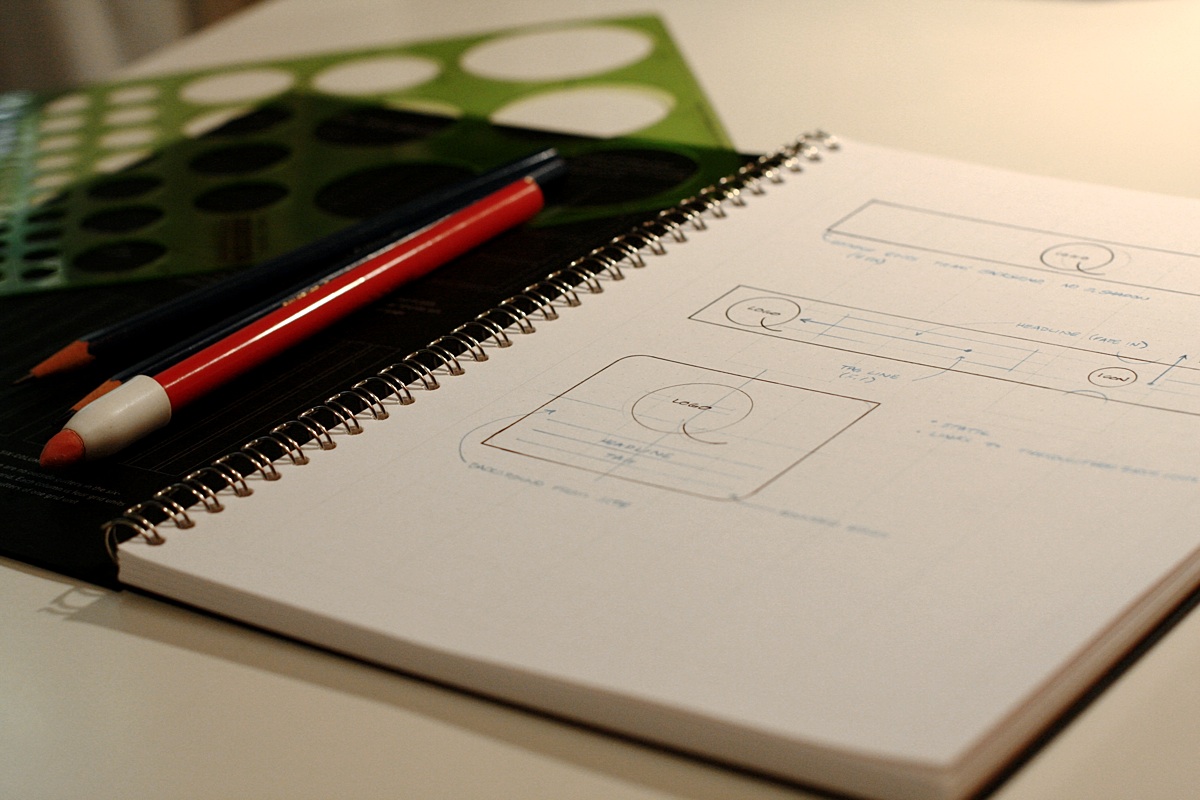
So, from an old-school designer’s point of view, Gridbooks are spectacular. Halfway through testing – with markers, pencils, and circle templates scattered on my desk – I wondered, “Why the hell wasn’t there something like this years ago?” They give you just enough guidance to make concepting easier without getting in the way of the creation process. They are surprisingly versatile, effortlessly usable, and beautifully minimalistic.

That beauty is only “so” nice though, and I like that. As any proper pen and pad snob will eventually confess; if the product is too nice, it risks never being used. I have a stack of sketchbooks and a mug of like-new pens because I am terrified I will ruin them by scrawling something unworthy of their perfectly designed form. Not so with Gridbooks. While they are attractive enough for any designer to carry into a brainstorming session they aren’t so good looking that they will never get used.

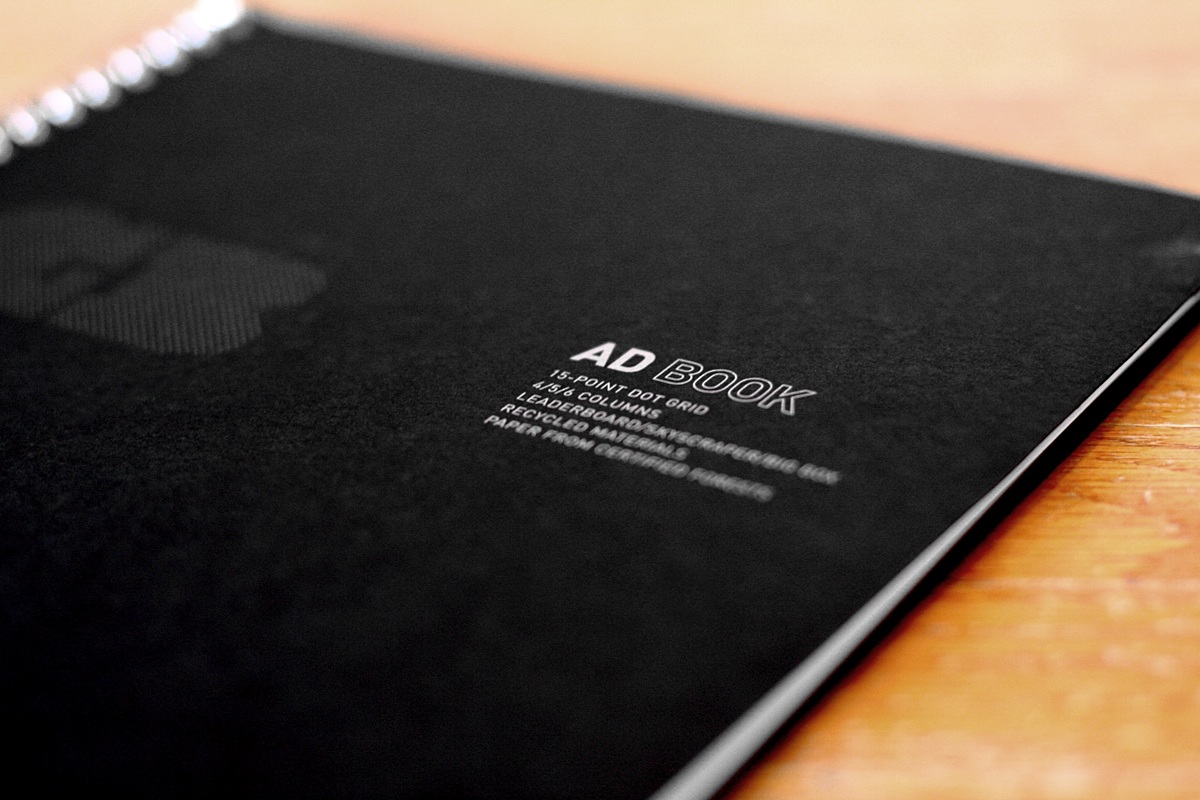
The cover of the Ad Book is a toothy 80 lbs. cover stock. It’s folded over on itself for added weight and it’s discretely printed in silver ink. The paper for the interior pages is an 80 lbs. text weight with just the right finish for pencil or pen. The grid lines and dots are just visible and all but disappear under your sketching; a feature I wish I could get from a certain Milan-based notebook company whose products I covet more then my next breath.

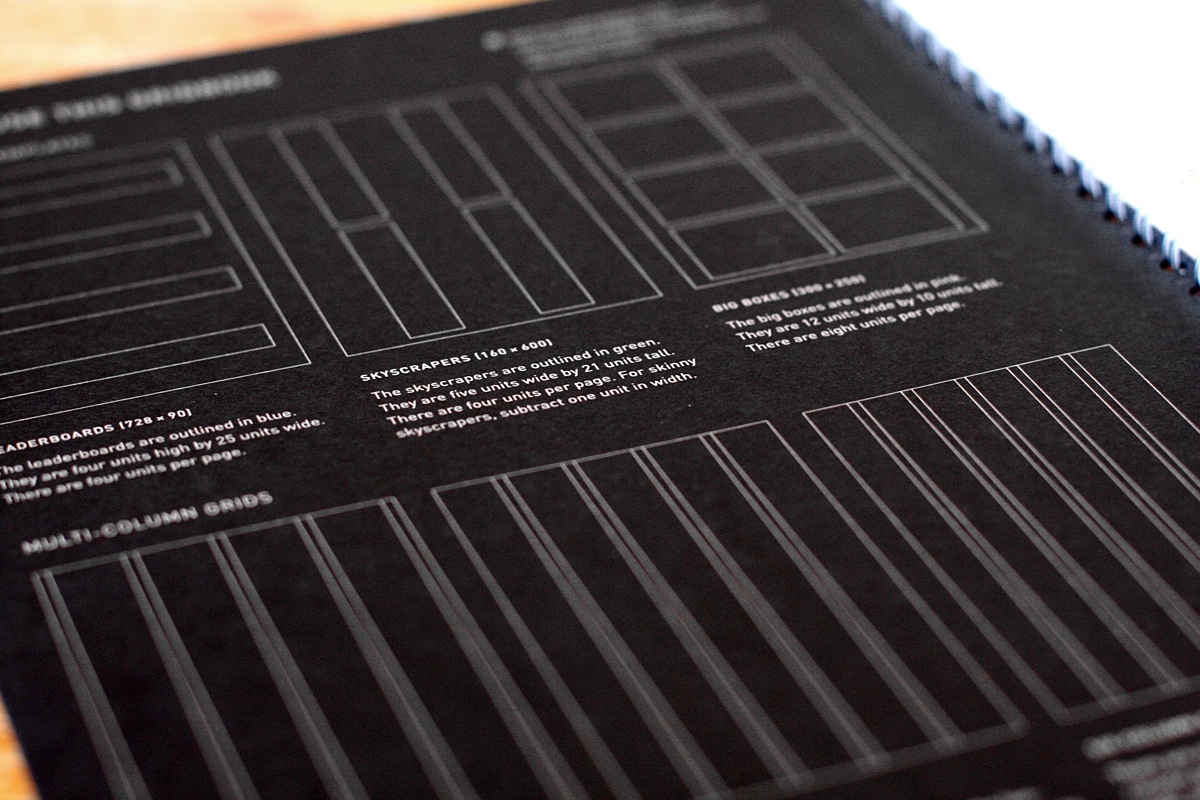
Gridbooks also use an ingenious technique of overlaying many grids on the same sheet. All the key ones are there; banner ads, skyscrapers, and big boxes. Each one is color coded for easy identifying and they are all pixel accurate. The same is true of the web layout pad with it’s 960 pixel 8, 12, and 16 column grids in addition to 3, 4, 5, and 6 column grids.

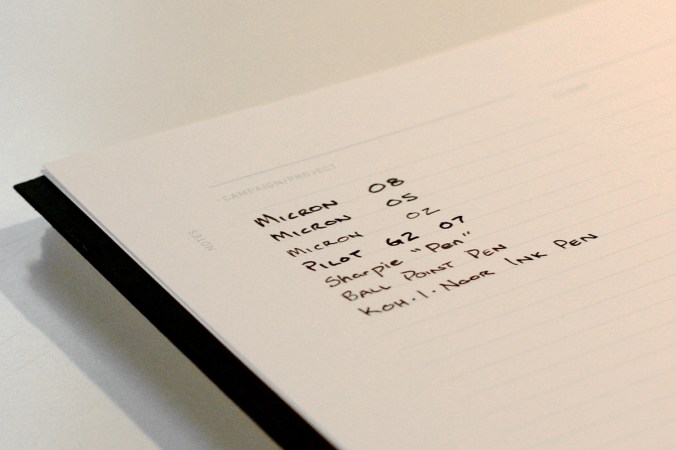
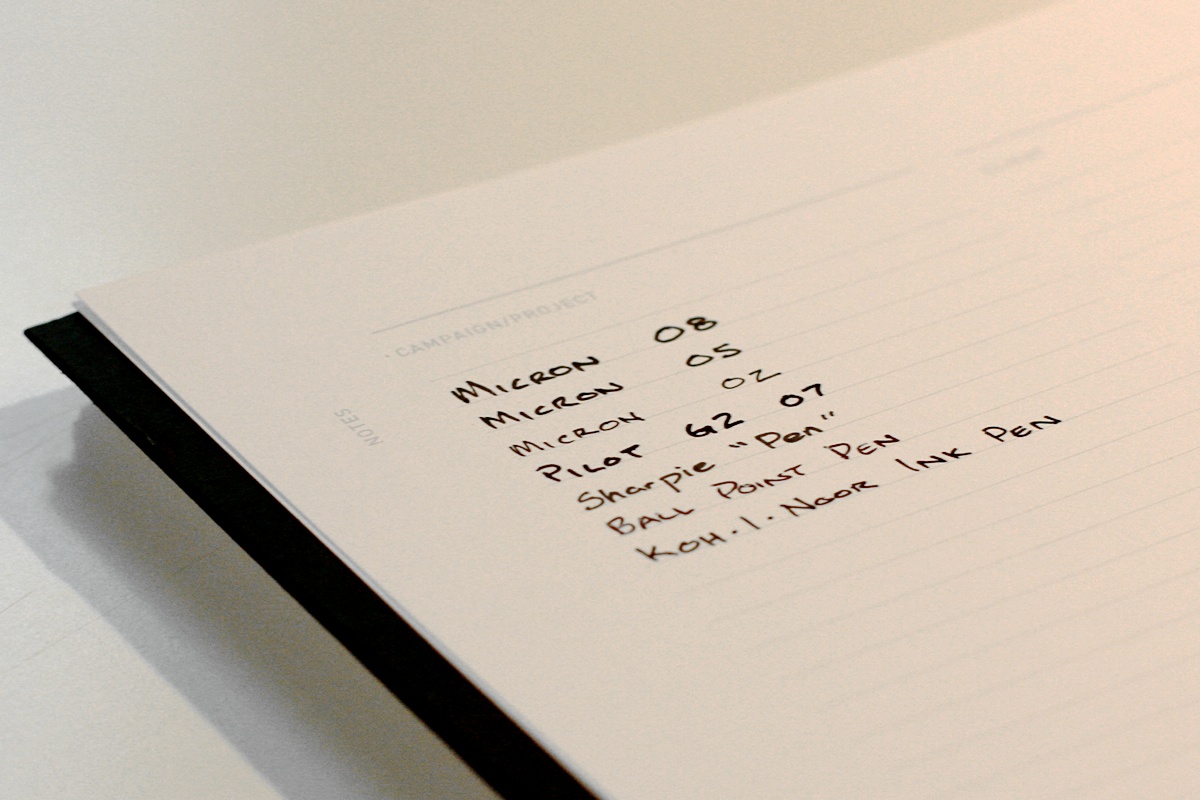
I tried a variety of pens and was pleased to find that they did not lose their edge or bleed through the page. You can truly use both sides of the sheet without fear of blotting up past ideas.

Gridbooks are worth every dime of the purchase price. I firmly believe that sketching is still superior to jumping straight into Photoshop, Fireworks, or even Balsamic. Sketching forces you to focus on the big picture and not get bogged down in the details and Gridbooks make that process faster and more painless then ever.

All photos by Josh Tuck. (In fact, these are the best photographs this blog has ever seen! I need Josh to take all my pictures.

Image Gallery:

Rad and Hungry launches pencil sharing program

Have I mentioned how much I love Rad and Hungry? Yes, I think I have.

ROCO pencils, bought in Saudi Arabia. The first 10 people to sign up for the Pencil Pals program gets one of these!

They’re at it again, with a new pencil sharing program just announced a few minutes ago, called Pencil Pals. Hen, one of the driving forces behind RAH, filled me in on some details. It was inspired by writing to her long-time pen pal:

I got my first pen pal when I was in the 1st grade and believe it or not but we’re still in touch despite me growing up in Seattle and her in Rochester, NY. I love the concept of pen pals and basically, I wanna be the best pen pal in the world! I include a personal note with each kit and I really look forward to writing the letters. It’s fun for me to really connect with our customers/fans. I hate when I get a package from a friend with no note. It feels so empty. Like something is missing.

Basically, this is how the program works. You sign up at the Rad and Hungry website (check back here for a link), and you get a pencil or two in the mail. They ask that you share some love on your blog, or post a pic of it to their Facebook wall, or tweet it out. Also, send them an email to let them know you recieved it.

RAH will email you the mailing address of another pencil pal, and you’ll have the option of sending along the pencil you received, or a different one from your collection. They strongly encourage you to send a note as well, perhaps telling about yourself or about the pencil you’re sending them. It’s a great way to make a human connection.

As soon as you mail it out, you’re entered back into the queue to receive another pencil.

This sounds like a lot of fun. It reminds me a bit of the “member pencils” that members of the American Pencil Collector’s Society trade (Note to self: You’ve been a member since last summer! Go get yourself some member pencils!)

Hen isn’t just hawking office supplies, they’re selling a way of life, and fostering connections between cultures. Like I mentioned before, what is your boring, old big-box mart office supplies may be a treasure for someone else who doesn’t get that variety otherwise.

This program is just eliminating the purchasing needed for that connection. It’s a way for you to meet your fellow pencileers without spending more than a postage stamp or two.

Visit Rad and Hungry for more details. And if you’re among the first ten to sign up, you’ll receive one of these awesome pencils bought in Saudi Arabia pictured above!

The Pen Type-A

While I love pencils, and use them as much as I can, sometimes you need a good, sturdy ink pen. And I’ve often run into the problem of a disposable pen that has a great ink cartridge and rollerball, but is encased in a crappy barrel.

That’s why I got excited when I surfed The Pen Addict the other day, a great blog I check every day that feels about pens the way I do about pencils.

Apparently there is a pen called the Pilot Hi-Tec-C, a gel pen I haven’t tried (but the Pen Addict really likes!) Unfortunately, the barrel is a bit cheap and plasticky.

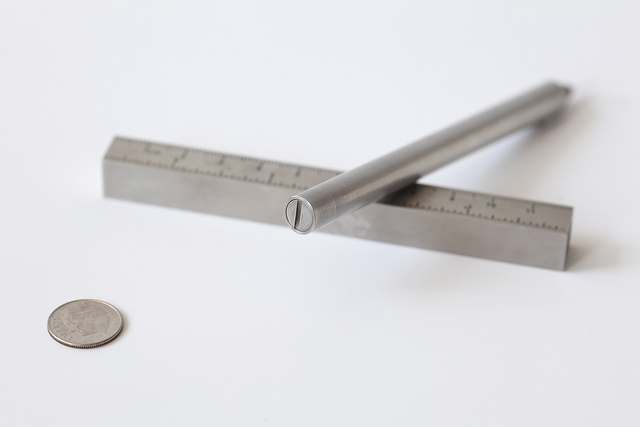
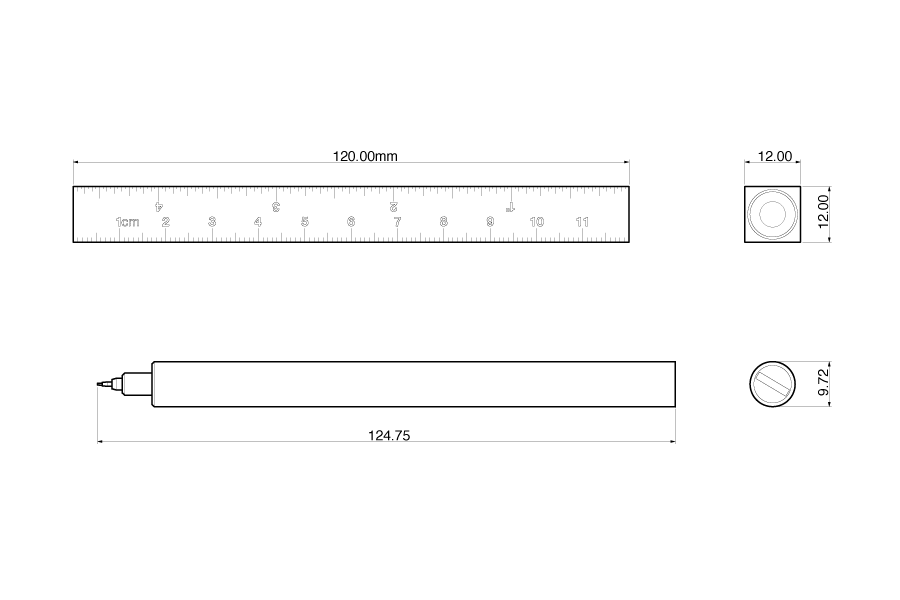
There’s a small design firm in Brooklyn called CW&T who found a solution to this problem — they started a Kickstarter projectfor a product called the Pen Type-A, a stainless-steel replacement barrel for the Hi-Tec-C cartridge.

The Pen Type-A

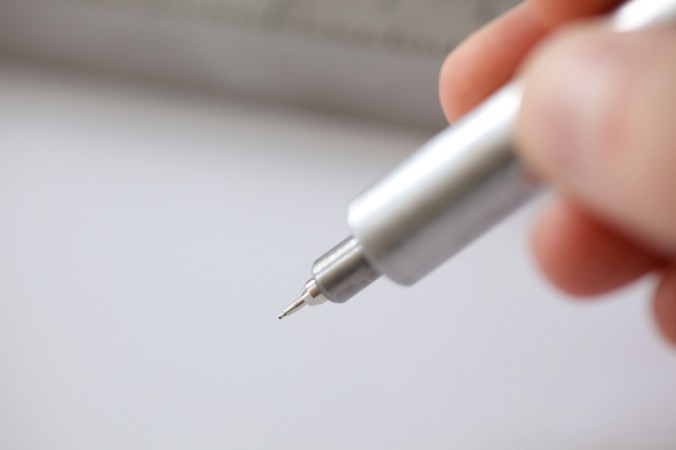
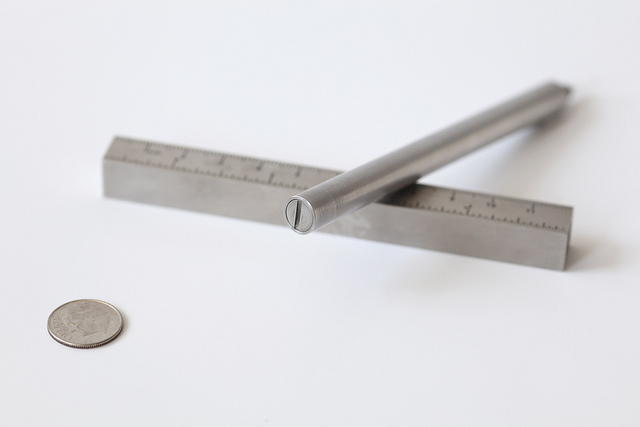
This thing is really beautiful. It’s milled from a single block of stainless steel, and the minimalist barrel fits into a square sheath (that has a ruler on the side!) so well, it almost has a pneumatic sliding effect.

If you pay $50 towards the (fully funded!) Kickstarter project, you’ll get one of these pens, which is a deal, because it’ll retail for $99.

I’ll admit, I’m thinking about it. It’s supporting a small, creative venture, and this thing really is gorgeous.

Check out CW&T’s Kickstarter Project to watch a quick video about why they decided to make this thing. And if you’re on Twitter, go follow Che-Wei Wang, the CW of CW&T: @sayway.